
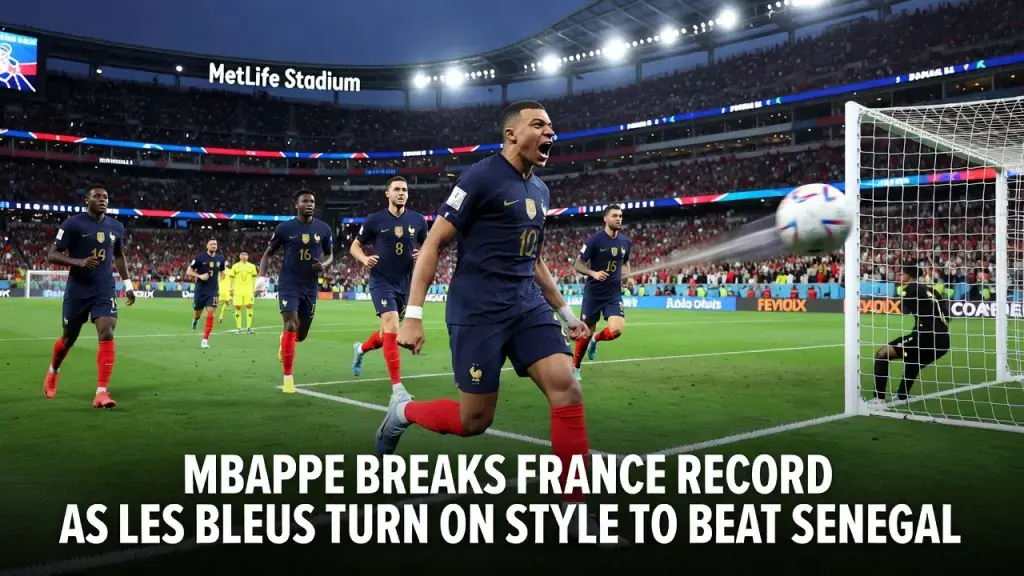
Mbappe Breaks France Record as Les Bleus Turn on Style to Beat Senegal
Authored by findgamesonline.com, 17-06-2026
France required patience - and a halftime tactical adjustment - but ultimately delivered the kind of second-half performance that explains why Didier Deschamps' side are considered among the frontrunners for World Cup glory. Goals from Kylian Mbappe (two) and substitute Bradley Barcola sealed a 3-1 win over Senegal at MetLife Stadium in New Jersey, a result that flatters the victors given how the opening 45 minutes unfolded.
The scoreline, however, should not obscure the genuine quality Senegal showed, particularly before the break, nor the controversies that coloured the contest. Referee Alireza Faghani's decision to wave away what appeared to be a clear penalty on Mbappe - standing firm even after consulting the pitchside monitor - left many baffled, and much like those who might bet georgia on an underdog and find the officiating inexplicable, Senegal supporters had every right to feel aggrieved. The Lions of Teranga are no strangers to controversial spot-kick decisions this year, having been on the wrong end of a debatable penalty in the Africa Cup of Nations final against Morocco in January.
Mbappe's second goal of the evening, a blistering long-range strike in stoppage time, was the moment that also etched his name further into history. The Real Madrid forward now stands as France's all-time leading scorer with 58 international goals, surpassing Olivier Giroud's benchmark of 57. In the World Cup record books, he sits joint-third with Gerd Müller on 14 goals, behind only Ronaldo (15) and Miroslav Klose (16). Records, it seems, are merely a backdrop to Mbappe's natural habitat.
Senegal's Strong First Half Deserved More
For all the post-match attention on France's attacking brilliance, Senegal were genuinely the superior side in the first period. Krepin Diatta repeatedly drifted inside past Désiré Doué with little resistance, El Hadji Malick Diouf delivered two excellent crosses into dangerous areas, and Ismaila Sarr posed a persistent threat on the counter. Nicolas Jackson, lively throughout, saw a low effort clip Mike Maignan's near post and deflect fortuitously clear. Sarr then spurned a gilt-edged chance inside the area in the final act before halftime, shooting over when a composed finish looked the simpler option.
France, by contrast, were disjointed and careless in possession, frequently losing midfield duels and surrendering the ball in areas that invited Senegal to press. The questions about how Deschamps integrates his remarkable array of forward talent - does Mbappe operate centrally or from the left where he has historically thrived? Is Michael Olise best served in a wider role or roaming freely as he does so devastatingly for Bayern Munich? - were going unanswered and the first half ended with a palpable sense of unease among French supporters.
The Tactical Shift That Changed Everything
The adjustments made at halftime were subtle but decisive. Olise was given licence to drift into more central and half-space areas, freeing him from the constraints of a rigid wide position, and the effect was immediate. Édouard Mendy twice produced last-ditch saves to deny both Olise and Mbappe as France seized control of the tempo. The breakthrough arrived on 66 minutes: Olise threaded a perfectly weighted pass into the area and Mbappe turned it home with the composure that has defined his game since he was a teenager at Monaco. The lead was then doubled with nine minutes remaining when Adrien Rabiot played in Barcola, the substitute coolly chipping over Mendy to settle the contest.
Senegal did not simply capitulate. Ibrahim Mbaye gave France a jolt with a thumping near-post finish past Maignan, showing the quality that makes this Senegal side genuinely dangerous. But Mbappe had the final word, collecting possession deep and unleashing a ferocious strike from range that left Mendy rooted.
Refereeing Questions and a Pitch Under Scrutiny
Beyond the goals, two other threads will run through the post-match conversation. The penalty incident - Sadio Mane's sliding challenge on Mbappe inside the box - appeared on multiple replays to be a clear foul. Faghani went to the monitor, French fans celebrated in anticipation, but the original decision stood on the basis that Mbappe had initiated contact. The call was baffling, and Faghani, who officiated his fourth World Cup having been tipped for the Qatar final before a difficult group stage, may face scrutiny from FIFA for a decision that seemed at odds with how such incidents are typically reviewed. It was, if nothing else, a reminder of how fine the margins can be.
The MetLife Stadium pitch also attracted renewed attention. Visible seams between turf rolls, ground staff working through halftime to smooth the surface and remove dead grass, and a sprinkler system deployed to prevent rapid drying - these are not images that inspire confidence for a venue hosting eight matches this summer, including the World Cup final on July 19. Vinicius Junior had already raised the issue following Brazil's draw with Morocco on the same surface, describing grass that dried out rapidly and disrupted his side's ability to circulate the ball. FIFA has indicated it is building in additional preparation time before the final, but the evidence on the ground - literally - suggests the surface remains a concern.
What This Means for Both Sides
For France, the result confirms the potential of this squad even when it takes time to arrive. The automatisms Deschamps speaks of - the instinctive, almost telepathic combinations between elite forwards - will sharpen with each match. A slow start is not unique to France; many serious World Cup contenders take time to find their rhythm in the group stage. By the final whistle in New Jersey, they were playing with the fluency and joy of a side that knows exactly what they are capable of.
For Senegal, the defeat stings but need not define their tournament. Their first-half display carried real conviction and they had the chances to lead. Pape Thiaw faces a genuine selection dilemma ahead of their next group fixture against Norway: Iliman Ndiaye, outstanding for Everton this season, did not start, while Mane - now 34 - showed flashes of his old quality but also moments that suggest his best days at this level may be behind him. Starting Ndiaye alongside Jackson and Sarr is an option Thiaw may feel compelled to explore. Senegal are not without the tools to progress; they simply need to be more clinical when the opportunity arises. This was a defeat, but not a damnation.