
Norway Face England in Historic Quarterfinal After Stunning Brazil at 2026 World Cup
Authored by findgamesonline.com, 11-07-2026
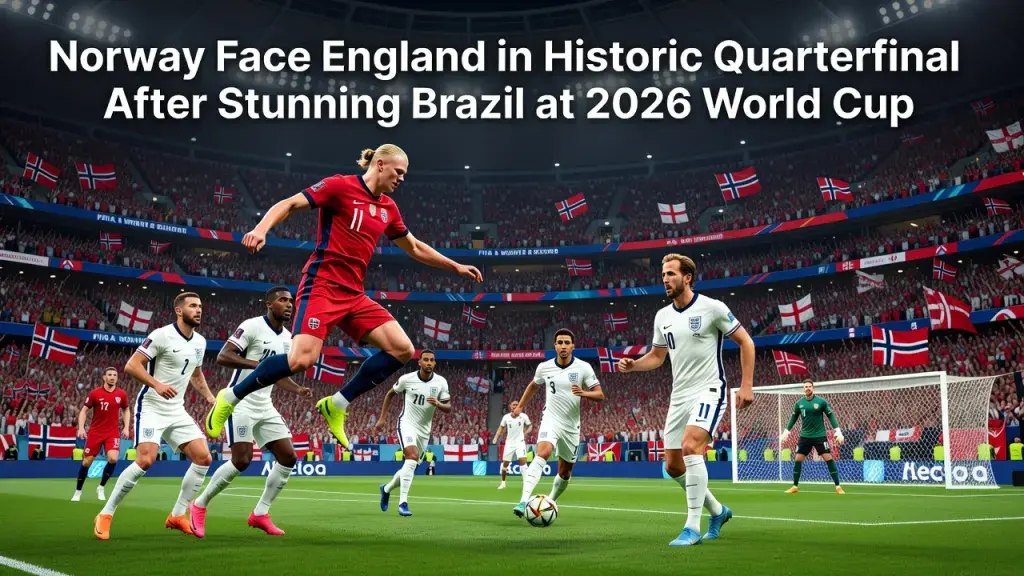
Norway have reached the quarterfinal of a World Cup for the first time in their history, defeating Brazil 2-1 in the round of 16 to produce the most significant result in Norwegian football. The achievement rewrites the country's international record and sets up a mouthwatering last-eight tie against England, a side that has moved through the tournament without defeat. For Ståle Solbakken's squad, the job is only half done - but the scale of what has already been accomplished deserves its full moment of recognition.
Norway's tournament has been built around one undeniable force: Erling Haaland, who has scored seven of the team's 11 goals during what has been a sensational debut World Cup campaign for the Manchester City striker. His output has elevated Norway from plausible dark horse to genuine threat, drawing comparisons with some of the tournament's all-time individual performances. In a summer full of compelling storylines - not unlike the furia sweep that captured attention in the esports world - Norway's run has captured the imagination of neutral fans across the globe. Behind Haaland, goalkeeper Ørjan Nyland has been composed and commanding, giving the team defensive solidity to match its attacking firepower.
The Lineup Question Solbakken Must Answer
The most pressing tactical question surrounding Norway ahead of the England quarterfinal concerns the starting eleven. In the victory over Brazil, Solbakken opted to introduce Oscar Bobb and Andreas Schjelderup at halftime, replacing Alexander Sørloth and Antonio Nusa respectively. The timing and nature of those substitutions raises a genuine dilemma for the head coach: were they planned rotations designed to manage the game, or did they reflect a shift in approach that he may look to replicate from the outset against England?
Bobb and Schjelderup both carried energy and directness after coming on, and there is a credible argument that starting them against a defensively organised England side could be tactically advantageous. Sørloth offers physicality and aerial presence, however, qualities that hold obvious value against a structured backline. Nusa brings pace and unpredictability on the flank. Solbakken is unlikely to reveal his hand early, but the choice he makes will define Norway's attacking identity for one of the most consequential matches in their football history.
England's Strengths and the Scale of the Task
England arrive in the quarterfinal as one of the tournament's most consistent performers. The Three Lions have yet to lose across five matches, and their form has been driven by Harry Kane - a Golden Boot contender whose clinical finishing at major tournaments has matured into something reliable and world-class - and the dynamic Jude Bellingham, whose ability to carry the ball, combine in tight spaces, and arrive late into the box makes him one of the most complete midfielders at the competition.
Norway will need to limit Bellingham's influence in transition and force England into a reactive game rather than allowing them to control possession and tempo. If Haaland can receive quality service and remain a constant aerial and physical threat, Norway have the tools to compete. Whether the underdog tag ultimately holds them back or drives them forward is perhaps the most compelling storyline left in their remarkable campaign.
Why This Moment Matters Beyond the Result
For Norwegian football, a quarterfinal appearance at a World Cup is more than a milestone - it is a validation of a generation of players who have come through at the highest club level in European football. Haaland, Bobb, Nusa, Schjelderup: these are players with weekly exposure to elite-level demands at clubs competing in the Champions League and top domestic divisions. The quality is real, and the 2026 tournament has given it a global stage.
Whatever happens against England, Norway have already changed the way the world perceives their football. The quarterfinal is not a ceiling to be feared - it is the floor from which the country now builds.