
FIFA's Expanded World Cup Delivers the Goods as 32 Teams Eye Knockout Glory
Authored by findgamesonline.com, 23-06-2026
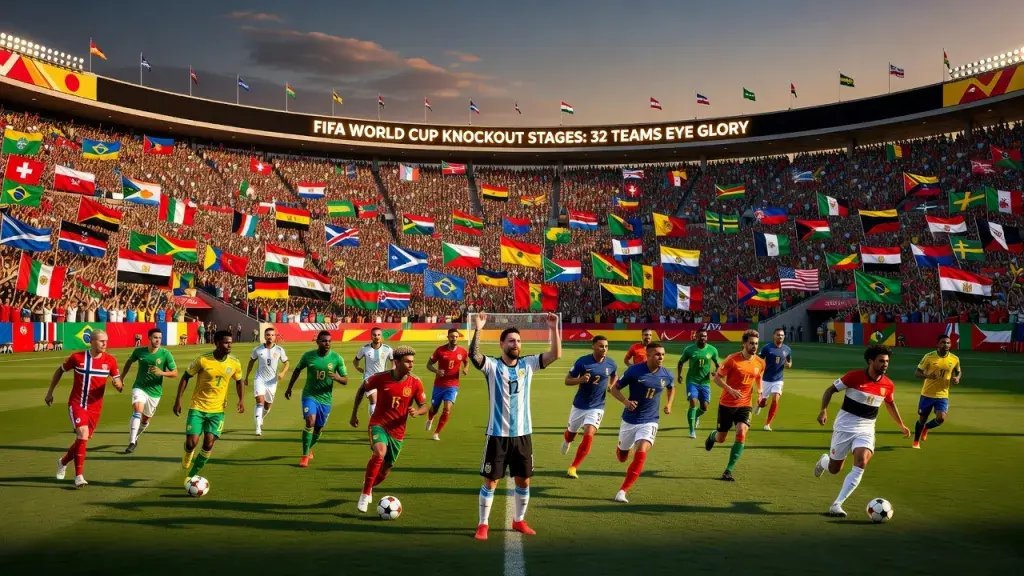
There has always been a certain cynicism attached to FIFA's decision-making - expand the tournament, sell more broadcast rights, generate more revenue - but the 48-team World Cup is making a compelling argument that more football genuinely means better football. Messi hat tricks, shock draws, emerging stars, and heavyweight statements have all arrived in the group stage, and now an unprecedented 32 teams will contest the knockout rounds, beginning Sunday in Los Angeles. The case that this is the finest World Cup yet is not an easy one to dismiss.
The group stage alone has served up narratives spanning every corner of the globe. Cape Verde goalkeeper Vozinha became a viral sensation against Spain, while Curaçao's Eloy Room tied a World Cup record against Ecuador - proof that a wider field produces wider stories. This kind of reach, from the Atlantic islands to the Caribbean, is precisely what makes the expanded format feel worthwhile to supporters across Africa, Asia, and the Americas. It is worth noting, incidentally, that the diversification of global sport audiences extends well beyond football - readers who track multiple disciplines can find niche sports markets covered at water polo betting sites, a reminder of how far the appetite for live sport now extends internationally. Back on the pitch, the tournament's first two weeks have validated FIFA's gamble in ways that even its critics may find difficult to argue against.
The star power has not disappointed. Lionel Messi recorded his first World Cup hat trick. Kylian Mbappé, Harry Kane, and Erling Haaland all arrived at the tournament in form. Mohamed Salah delivered when Egypt needed him most, steering the Pharaohs toward what would be a historic first knockout-round appearance - four points from two matches, built on balanced, direct football and Salah's individual brilliance across 161 minutes of action. Africa's most decorated footballing nation, seven-time AFCON champions, is finally writing its World Cup chapter.
The Contenders: Who Can Actually Win This Thing
Brazil enter the knockout rounds with arguably the most individually gifted attacking pool in the tournament, but Carlo Ancelotti's side carries a structural fragility that sharper opponents will probe. Vinícius Júnior's brilliance salvaged a draw with Morocco, and the squad still possesses depth in attack - Matheus Cunha, Igor Thiago, Gabriel Martinelli, Endrick - yet the fullback positions remain a concern, with ageing options at both flanks and a midfield leaning heavily on 34-year-old Casemiro to hold the defensive line. Raphinha's hamstring injury has removed the team's most effective pressing presence, and for all of Brazil's creativity, that structural imbalance is real.
Spain, despite a jarring 0-0 draw with Cape Verde, recovered emphatically against Saudi Arabia and remain the most technically complete side in the field. Lamine Yamal's involvement from the start against Saudi Arabia was a statement of intent, and the champions of Euro 2024 carry depth at every position. The concern is whether a less-than-fully-fit Nico Williams and a post-ACL Rodri can replicate the specific dynamic that made them so difficult to contain at the Euros. One poor sequence in a five-round knockout competition is all it takes.
Germany look ferocious in bursts - Deniz Undav producing three goals and two assists in just 56 minutes off the bench is a remarkable asset - but the stretches of ineffectiveness against the United States and Ivory Coast, combined with Nico Schlotterbeck's potential tournament-ending injury, represent genuine vulnerabilities against top-tier opposition. The Netherlands dismantled Sweden 5-1, with Cody Gakpo and Brian Brobbey combining for four goals, but Ronald Koeman's conservative instincts at critical moments remain a credible tactical concern.
The Outsiders Worth Taking Seriously
Morocco are playing more sophisticated, possession-aware football than in their historic 2022 semifinal run, and that adds a dimension to an already well-organised defensive structure. The caveat is the bench: in both matches, their xG differential deteriorated significantly in the final half-hour once substitutions were made, and winning five knockout games requires depth as well as quality. Japan, meanwhile, have controlled matches with a level of tactical discipline that belies the absence of Kaoru Mitoma, Takumi Minamino, and Wataru Endo - all injured before the tournament. Their averages across possession metrics and transitions suggest a team that concedes very little, but the firepower they have lost may become consequential in the latter stages.
Switzerland have been quietly outstanding by the numbers - fourth-highest xG generated, third-lowest allowed - though poor finishing against Qatar kept those figures from translating into a convincing scoreline. Granit Xhaka provides the experience, 20-year-old Johan Manzambi the energy, and when body language became an issue after a missed chance, the Swiss conceded a late equaliser. That mental fragility, as much as any tactical deficiency, is what separates a deep run from an early exit. Egypt, Canada, and the United States each carry their own specific ceiling-versus-vulnerability dynamic, and the knockout rounds - with their compressed margins - will expose whichever flaw each team has been hiding.
Why This World Cup Matters Beyond the Scorelines
FIFA's expansion decision was driven by commercial logic, but the product on the pitch is making a sporting argument for itself. More teams means more nations with genuine emotional investment, more unexpected stories, and a knockout bracket that opens up in ways a 32-team group stage never quite did. Whether Brazil finally end their long wait, Spain extend European dominance, or an outsider like Morocco or Japan rewrites football history, the structure guarantees drama across every timezone. For markets in Brazil, across Africa, and throughout Asia - all watching players they know and teams they care about - this is the World Cup that was always promised. It may, for the first time, actually be delivering it.